The Massachusetts crossing
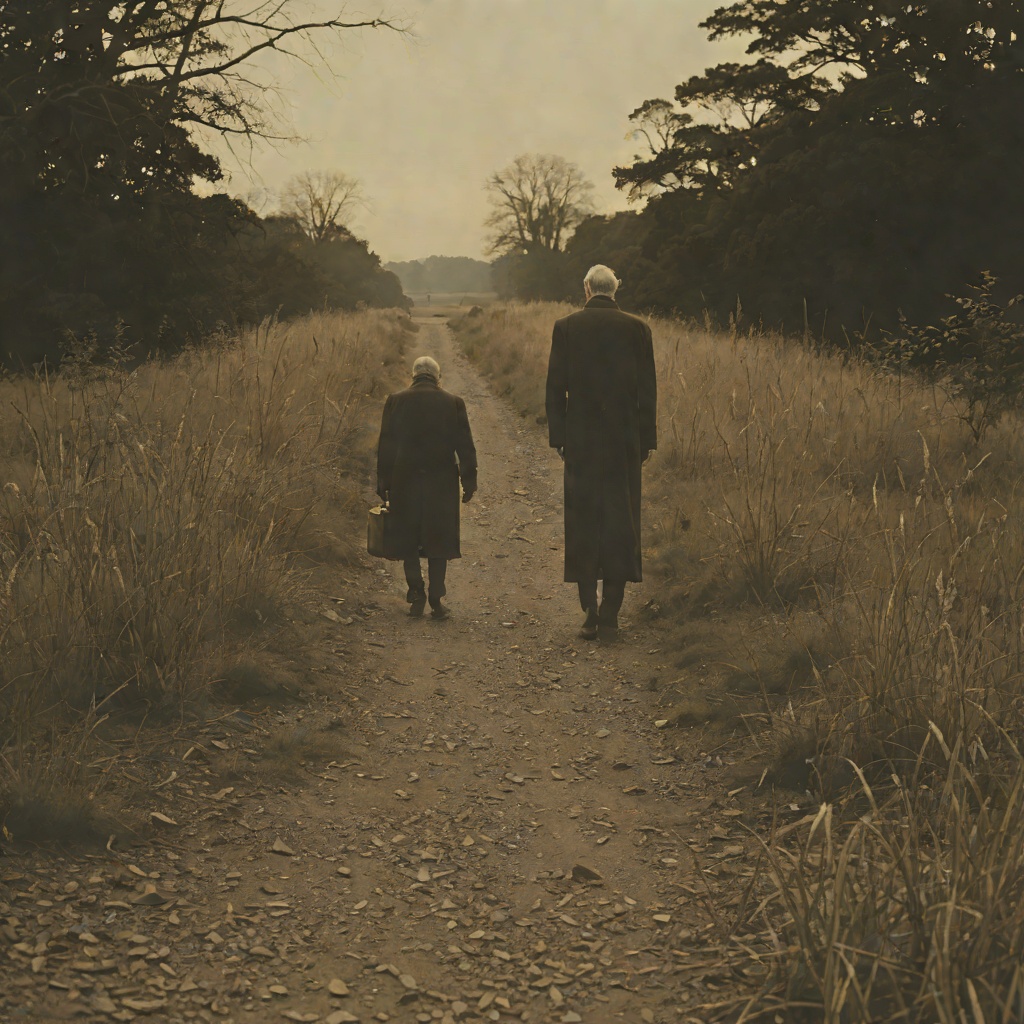
The Long WalkThe Massachusetts crossing marks the Long Walk’s most consequential geographical threshold before its final descent toward the Prize. After days of regulated movement, warnings, shootings, hunger, and exhaustion, the walkers enter Massachusetts as a drastically reduced group of seven. The border promises historical importance and public acclaim, yet the passage offers no safety; it intensifies the spectacle around the walkers while bringing them closer to death, disclosure, and the final confrontation with the Major.
Causes and Background
The crossing is prepared by the walkers’ prolonged movement along U.S. 1 through New Hampshire. Peter McVries says that he expects them to reach Massachusetts, while Stebbins identifies it as the first Long Walk to do so in seventeen years. This historical claim gives the border an official and almost legendary significance, but it also reveals how the Event turns bodily endurance into a record for public consumption. The walkers are not merely approaching a state line; they are being driven toward a milestone that the Crowd has been taught to celebrate.
The route narrows at this point. A banner announces that they are only fifteen miles from the Massachusetts border, and the narration notes that New Hampshire occupies only a narrow neck of land between Maine and Massachusetts along U.S. 1. The physical geography therefore compresses the remaining distance into a funnel. The walkers have little room to escape the road, the spectators, or the soldiers, and the border becomes less a place of release than the next compulsory station in a controlled procession.
The Border Spectacle
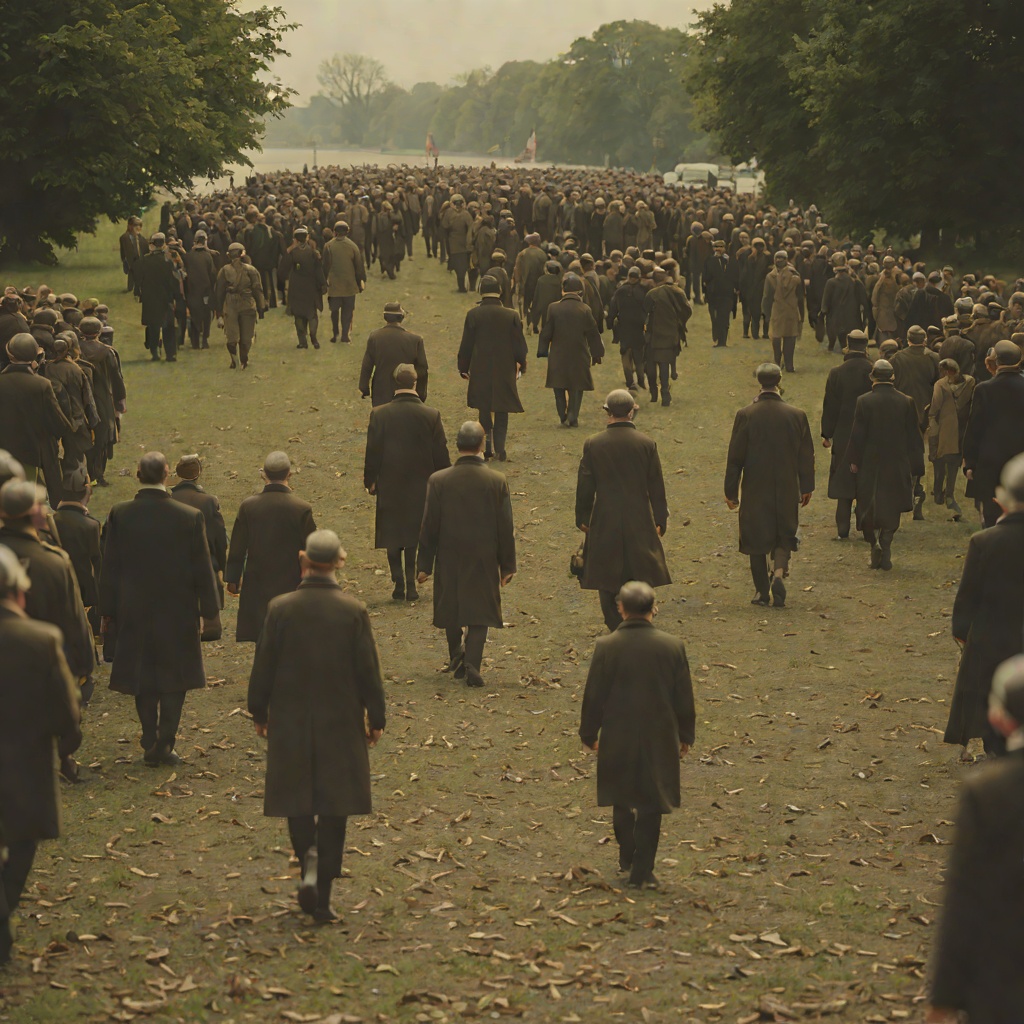
The crossing occurs shortly before two in the morning amid the greatest pandemonium yet. Cannons fire, fireworks illuminate the rainy sky, competing brass bands play martial music, and the cheers of the multitude become thunderous. An airburst forms the Major’s face in fire before presenting the face of the New Hampshire Provo Governor, a figure celebrated for having stormed a German nuclear base in Santiago nearly singlehandedly in 1953, though he lost a leg to radiation poisoning. The ceremony fuses military display, political authority, bodily sacrifice, and entertainment into one public image.
This spectacle makes the Massachusetts crossing a state ritual rather than a simple change of location. The color and noise conceal the walkers’ condition while magnifying the authority of the officials who stage the passage. The border crossing appears festive because the Crowd and its institutions interpret survival as entertainment, but the walkers experience the same moment through rain, pain, and the monotony of forced movement. The contrast between the public celebration and the private condition of the survivors gives the event its central irony: the more historically important the crossing becomes, the less humanly restorative it is.
Participants and Immediate Stakes
When the walkers cross into Massachusetts, seven remain: Ray Garraty, Arthur Baker, Peter McVries, George Fielder, Bill Hough, Milligan, and Stebbins. George Fielder is described as a struggling, hollow-eyed skeleton, while Milligan is tall, muscular, and not yet in truly serious shape. The list is both a roll call of survivors and a measure of attrition. Earlier, the deaths of Curley and Ewing had already been translated into the changing odds of those remaining; at the Massachusetts line, the same process reaches a stark numerical form, with individual lives reduced to the number still moving.
The border also follows an episode of renewed psychological pressure. Stebbins taunts Ray Garraty with a sexual insult, but Garraty reports that the old psychological warfare no longer affects him. He forces down an entire chocolate bar despite his stomach’s violent resistance and claims that he can walk another full day, perhaps two more if necessary. His defiance suggests a temporary recovery of control over his own body, yet it is a fragile victory: the act of eating is itself a struggle, and his confidence is spoken against a background of continuing physical breakdown.
Revelation and Consequences
Immediately before the crossing, Stebbins reveals that the Major is his father. The revelation changes the meaning of Stebbins’s earlier knowledge of the Long Walk and explains why he has spoken about the Event with unusual certainty. His confession is nearly swallowed by the Crowd’s reaction: the spectators cheer mindlessly, apparently responding to the guns rather than to the words, while Pastor is shot dead. The public noise thus converts a disclosure about the Event’s inner power structure into another piece of entertainment and another death.
Stebbins’s revelation makes the Massachusetts crossing a threshold of knowledge as well as geography. The walkers are entering the state under the shadow of a newly exposed familial connection between the Event’s chief authority and one of its contestants. The fact does not weaken the machinery around them. Instead, it emphasizes the intimacy of the system’s power: the Major is not only an external commander overseeing the walkers but also Stebbins’s father, linking public authority, private inheritance, and the competition’s violence.
The pomp slowly falls behind after the crossing, but the weather does not improve. Rain continues constantly, and the wind tears at the crowd beneath a pale sky, lifting caps into brief, violent arcs. Ray Garraty experiences a momentary lightness in which the pains in his back and neck seem to stop and his feet appear to remember their former strength. The sensation resembles reaching a peak after a difficult climb, yet the image immediately turns downward: there is nowhere to go except down at flying speed. The border therefore produces no stable renewal. Its brief exhilaration is a bodily and psychological reprieve that anticipates further collapse.
Narrative Significance
The Massachusetts crossing concentrates the Long Walk’s recurring contradictions. It is a celebration built from death, a public milestone reached through private suffering, and an apparent advance that brings the survivors closer to annihilation rather than freedom. The border’s cannons, fireworks, banners, uniforms, and music transform exhaustion into a national spectacle, while the reduced group of seven exposes the cost hidden beneath that spectacle.
The event also joins three forms of counting: distance, survivors, and authority. Fifteen miles remain before the border; only seven walkers reach it; and Stebbins’s confession reveals that the Major’s power is rooted in a personal relationship as well as official command. By the time Ray Garraty reaches Massachusetts, the Long Walk has stripped away most ordinary social identities while making each remaining body more visible to the Crowd. The crossing is consequently both a geographic achievement and a deeper capture of the walkers by the Event’s ritual, political, and lethal logic.